"Testosterone therapy is a legitimate, effective, FDA-approved treatment," says the Las Vegas longevity expert. "My argument is only about the order. Find out what is suppressing the number before you decide it cannot be raised."
Las Vegas, Nevada, United States, 4th Sep 2026— Dr. John Spencer Ellis wants to be clear about something at the outset.
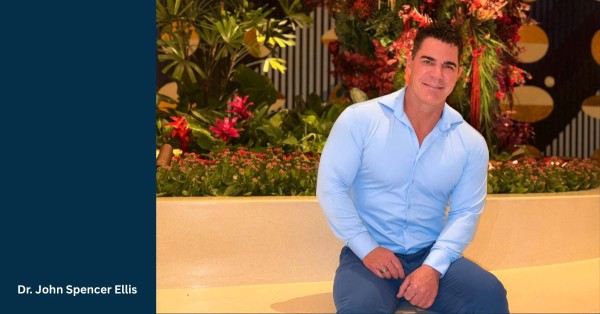
"I am not anti-TRT. Testosterone replacement is a legitimate medical therapy with a substantial evidence base, and for men who genuinely need it, it can be life-changing," said the internationally recognized authority on men's health, longevity and human performance. "The 2023 TRAVERSE trial of 5,246 men found it noninferior to placebo for major adverse cardiac events, and the FDA removed the cardiovascular warning from testosterone labeling in 2025. That was a real and reassuring finding."
"My argument is entirely about sequence. Before a man concludes his testosterone cannot be raised, he should find out what is currently lowering it. That is not a delaying tactic. It is a diagnostic one."
The number most men land on
The Endocrine Society clinical practice guideline recommends treatment when total testosterone falls below 300 ng/dL, confirmed on two separate fasting morning draws, in a man with genuine symptoms of hypogonadism.
Dr. Ellis notes that most symptomatic men over 40 do not return a result that clear.
"They come back somewhere between 300 and 450. That is a real conversation and a genuine grey area — the literature calls it functional hypogonadism. And the important word is functional. It describes suppression driven by an identifiable and frequently reversible cause rather than a primary failure of the testes or pituitary. Those are different situations that warrant different first responses."
Sleep: the largest single factor
The most direct evidence comes from a study published in JAMA. Leproult and Van Cauter opened their paper with a statement Dr. Ellis considers the single most important sentence in this field: the majority of the daily testosterone release in men occurs during sleep.
They then restricted ten healthy young men to under five hours a night for one week in a laboratory. Their testosterone was significantly lower than when they had full nights of sleep — a reduction commonly cited at 10 to 15 percent, produced in seven days by men in their twenties.
"Now apply that to a 48-year-old who has been sleeping six fragmented hours for four years," said Dr. Ellis. "The study's senior author described short sleep duration and poor sleep quality as endocrine disruptors. That is the correct framing."
He adds one point men frequently miss: the same study found increased cortisol and reduced SHBG, consistent with developing insulin resistance.
Body composition: the mechanism nobody explains
The second major factor is visceral fat, and Dr. Ellis says most men have never been told how it works.
"Abdominal fat is not passive storage. It contains aromatase, an enzyme that converts testosterone directly into estrogen. So gaining visceral fat does not merely accompany low testosterone. It manufactures it."
That creates a self-reinforcing loop. Stress raises cortisol. Cortisol drives abdominal fat. That fat converts testosterone. Lower testosterone removes the drive to train. Less training means more fat.
"A man five years into that loop is measuring his last five years, not his age."
Alcohol, stress and sleep apnea
Alcohol suppresses testosterone production directly and fragments the sleep architecture that generates most of it. It is repeatedly identified in the literature as a male-typical response to stress, meaning it rises quietly at exactly the point self-monitoring is weakest.
Chronic stress suppresses testosterone through cortisol — the two hormones move inversely, so sustained elevation of one lowers the other.
Obstructive sleep apnea is associated with reduced testosterone, is common in men over 40, is treatable, and is routinely undiagnosed. "If you snore or wake unrefreshed, get screened," said Dr. Ellis. "For some men that single step is the entire answer."
Nutrition and environment
Dr. Ellis flags several factors men rarely consider.
Chronic under-eating while training hard suppresses the hypothalamic-pituitary-gonadal axis, as does chronically low dietary fat. "Aggressive dieting is not a testosterone strategy."
Overtraining raises cortisol and lowers the testosterone-to-cortisol ratio. More is not better.
Genuine micronutrient deficiencies — vitamin D, zinc, magnesium — are worth correcting where bloodwork demonstrates a real shortfall. "Correcting a deficiency helps. Supplementing above sufficiency does not, and the commercial booster category performs poorly in controlled trials. Tribulus in particular repeatedly fails."
Medications including opioids and glucocorticoids suppress testosterone. "A five-minute medication review with your physician occasionally explains everything."
What the panel should include
Dr. Ellis emphasizes one omission he sees constantly in direct-to-consumer testing.
"Get LH and FSH. Those two distinguish primary hypogonadism, meaning the testes, from secondary, meaning the pituitary or hypothalamus. They determine everything downstream, and they are frequently left off. A total testosterone number alone answers almost nothing."
His recommended panel: total and free testosterone, SHBG, LH and FSH, prolactin, estradiol, hematocrit, PSA, lipids, HbA1c, thyroid and vitamin D.
Ninety days, then a genuine decision
"Correct sleep, alcohol, visceral fat and stress for ninety days, then retest under identical conditions — same time of day, same lab, fasted," said Dr. Ellis.
"If the number rises, you were functionally suppressed and you have avoided a lifelong therapy you did not need. If it does not, you now have a well-characterized case with the reversible factors already corrected — and you are a far better candidate for treatment than you were ninety days ago. Your physician will find it much easier to act on."
He notes one exception. "If the number is markedly low, or LH and FSH suggest a pituitary issue, that is a prompt medical matter, not a lifestyle project. Take an abnormal result to a physician regardless of anything I say."
The coaching program
The Health, Longevity and Aesthetic Optimization Program for Men 40+ is a 90-day personalized engagement built around executing exactly this sequence: comprehensive intake covering sleep, stress load, alcohol and medications; bloodwork guidance alongside the client's own physician; a protocol sequenced so sleep and alcohol stabilize before training load increases; and twelve weekly one-on-one coaching sessions.
Dr. Ellis is a coach and educator, not a physician or endocrinologist. He does not diagnose, treat or prescribe, does not order or interpret laboratory tests, and does not prescribe, supply or advise on testosterone therapy. Hypogonadism is a medical diagnosis and TRT is a prescription decision belonging entirely to a qualified physician. He has no financial interest in any testing service, supplement or hormone therapy.
Details on both programs: https://johnspencerellis.com
About Dr. John Spencer Ellis
Dr. John Spencer Ellis has been an award-winning health expert and entrepreneur since 1992. He is a Personal Trainer Hall of Fame inductee, named among the Top 100 Most Influential Personal Trainers of All Time, and a Quilly Award winner. He holds two bachelor's degrees, an MBA and a doctorate in education, plus 14 months of doctoral-level naturopathic health education study, alongside 15 professional certifications, a license in radiological technology, and a medical assisting certification with phlebotomy.
His programs have been used by Cirque du Soleil, the Army, Navy, Air Force, Marines, U.S. Secret Service and Coast Guard. His work has been featured on Oprah Radio, ABC, NBC, CBS, PBS, FOX and ESPN.
Media Contact
Organization: Dr. John Spencer Ellis
Contact Person: Dr. John Spencer Ellis
Website: https://johnspencerellis.com
Email: Send Email
Contact Number: +14803822464
Address:2780 S. Jones Blvd, Ste 200-3464 Las Vegas, NV 89146-5623
City: Las Vegas
State: Nevada
Country:United States
Release id:48796
The post Dr. John Spencer Ellis Urges Men Over 40 to Rule Out Reversible Causes Before Starting TRT — Not Instead of It appeared first on King Newswire. This content is provided by a third-party source.. King Newswire is a press release distribution agency. We do not accept any responsibility or liability for the accuracy, content, images, videos, licences, completeness, legality, or reliability of the information contained in this article. If you have any complaints or copyright concerns related to this article, please contact the company listed in the ‘Media Contact’ section above.
Disclaimer: The views, recommendations, and opinions expressed in this content belong solely to the third-party experts. This site was not involved in the writing and production of this article.